

news
American Superstars Heading to Europe: Redemption or Another MXoN Disaster?
Team USA historically struggles on European soil at the Motocross of Nations because American riders arrive exhausted from a brutal 31-race AMA calendar, while European GP competitors specialize in deep, un-groomed sand and 35-minute physical endurance motos. To claim redemption and hoist the Chamberlain Trophy, American riders must abandon stiff Supercross chassis setups, adopt European standing footpeg techniques, and secure front-row starting gate positions during Saturday qualifying heats.
The Chamberlain Trophy remains the most prestigious team prize in global motorsport, but for American riders, European soil has often felt like an ambush. Packed into hostile valley circuits surrounded by 80,000 chainsaw-revving European fans, US superstars who dominate domestic stadiums frequently find themselves buried in knee-deep mud and out-paced by Grand Prix regulars. As Team USA prepares for another transatlantic crossing, the line between sweet redemption and national heartbreak hangs on microscopic technical details.

The Motocross of Nations pack storming off the gate in front of deafening international crowds
1. The Fatigue Paradox: 31 American Races vs European Pacing
The fundamental disadvantage facing American riders is scheduling volume. An AMA factory racer competes in 17 rounds of Supercross from January through May, transitions immediately into 11 rounds of Pro Motocross through August, and endures three high-stress SuperMotocross playoff rounds in September. By October, American bodies are battered by torn cartilage, accumulated concussions, and mental fatigue.
In contrast, MXGP competitors race twenty rounds with built-in rest weeks, focusing purely on 30-minute plus 2-lap outdoor motos. European riders do not spend months pounding stadium supercross whoops, allowing their suspension valving and physical conditioning to remain fully synchronized with natural outdoor terrain. When Americans touch down in Europe, they are running on fumes against rivals peaking for the event of their lives.
| Factor | Team USA (AMA Roster) | Team France / Netherlands (MXGP) | Tactical Impact at MXoN |
|---|---|---|---|
| Total Pre-Race Gate Drops | 31 weekends (SX + MX + SMX) | 20 rounds (Pure MXGP outdoor) | US riders carry significant cumulative fatigue |
| Track Prep Familiarity | Groomed clay, disced topsoil | Un-groomed sand, rough peat | European ruts develop jagged, blind square edges |
| Starting Gate Format | Metal starting mesh (Standard) | Metal starting mesh (Standard) | Holeshot reaction times are equalized |
| Moto Distance Pace | Sprint-heavy first 15 minutes | Endurance grinding through minute 35 | European racers mount late-moto charges |
2. The Saturday Qualifying Lottery and Sunday Gate Picks
One of the most unforgiving elements of the Motocross of Nations is the ballot draw. On Friday afternoon, team managers draw numbered balls from a lottery cage to determine Saturday qualifying gate picks. If Team USA draws gate 34, their riders must start on the extreme outside for the qualifying heats.
On tight European circuits like Ernee or Kegums, an outside gate pick virtually guarantees getting pinched off into the first corner. American riders often spend their Saturday qualifying motos battling through midfield roost to salvage a top-ten gate pick for Sunday’s main motos. When starting from row two on Sunday against the best thirty riders on earth, winning the Chamberlain Trophy becomes an uphill battle.

Navigating relentless square-edged chop requires standing balance and supple suspension compliance
The Skeptic View: American Hegemony is Over
The era when Team USA could send three riders to Europe and dominate by two full laps is permanently gone. European Grand Prix racing has developed into an elite physical proving ground, and domestic American talent is too narrowly focused on indoor supercross skills. Unless AMA riders commit to European-style sand training, overseas trips will continue to yield disappointing podium misses.
The Patriot Case: Speed and Heart Under Pressure
When properly prepared, American riders possess unmatched sprint intensity and racecraft. Historic victories at RedBud and Lommel demonstrated that when USA team members adapt their suspension clickers and embrace selfless teamwork, their raw speed can dismantle any national squad. Doubting American grit at the Nations always proves premature.
3. The Blueprint for American Redemption
To reclaim the Chamberlain Trophy on European turf, Team USA must execute a disciplined strategic playbook. First, factory mechanics must fly overseas two weeks early to test on natural sand circuits like Lommel or Grevenbroich, dialing in soft suspension valving rather than using domestic outdoor setups.
Second, riders must treat the event as an endurance team marathon rather than an individual sprint. In the three-moto combined scoring system where five of six scores count, avoiding DNFs and securing consistent top-five finishes beats reckless win-or-crash charges. As analyzed in our coverage of the MXGP deep ruts debate, conquering international terrain requires humble adaptation to local track conditions.
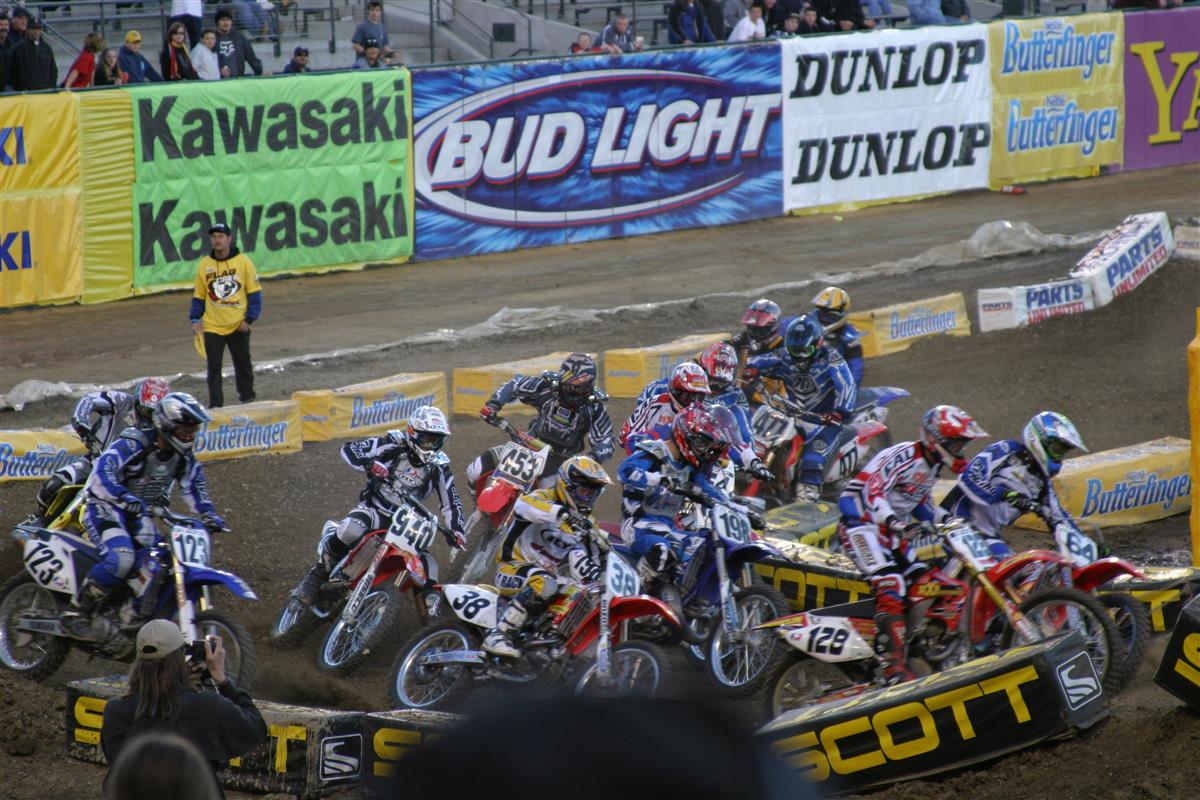
Launching off the gate under national flag colors brings emotional intensity unmatched in domestic racing.
4. On-Board Action: Team USA POV from MXoN
5. Global Pride and the Unbroken Spirit of the Nations
The Motocross of Nations remains unscripted sports drama at its finest. When riders line up for their country, individual championship rivalries dissolve into collective brotherhood. Whether Team USA hoists the Chamberlain Trophy or faces the bitter sting of defeat, their willingness to cross the Atlantic and test themselves against the best in the world honors motocross history.
Governing bodies including the FIM and the AMA celebrate this event as the pinnacle of global off-road competition. Motocross journalists at Racer X Illustrated remind us that every trip across the Atlantic carries the weight of a nation’s pride.
6. FAQs
How many times has Team USA won the Motocross of Nations?
Team USA holds the all-time record with 23 Chamberlain Trophy victories, highlighted by an unbroken 13-year winning streak from 1981 through 1993. However, victories on European soil have grown substantially rarer over the past two decades.
How does the scoring system work at the Motocross of Nations?
Each team fields three riders across MXGP, MX2, and Open classes. Three mixed-class motos are contested on Sunday, yielding six individual finish scores. Each nation drops their worst single moto score, and the country with the lowest cumulative point total wins the trophy.
Why do European fans bring chainsaws without bars to the race?
It is a storied European motocross tradition. Spectators remove the cutting bar and chain from standard two-stroke chainsaw motors, revving the engines trackside alongside air horns and smoke flares to create a wall of deafening sensory chaos.
7. Final Verdict: The Crucible of Champions
Heading to Europe for the Motocross of Nations is the ultimate test of racing character. It strips away the comfort of familiar domestic tracks and forces American superstars to confront alien dirt, hostile crowds, and ruthless competition. When victory is achieved under those conditions, it stands as the crowning achievement of a racer’s career.
Join the community debate and cast your podium votes with thousands of motorsport fans on our official Facebook page. Will Team USA bring home the Chamberlain Trophy, or will European track conditions claim another victim? Share your predictions.
Wear the Spirit of International Motocross
Explore authentic motorsport apparel engineered for hardcore race fans from KozmozRacing Outfits.