

news
2026 SMX World Championship Finals: Who Will Win the $1 Million Prize?
Who will win the $1,000,000 SMX Championship at Thunder Ridge? Defending champion Jett Lawrence (Team Honda HRC) enters the Missouri finale as the statistical favorite thanks to unmatched line selection and low-stress Olympic moto consistency (1-1 / 1-2). However, the triple-points format (75 points for the overall win) keeps Chase Sexton (Red Bull KTM) and veteran Eli Tomac (Monster Energy Yamaha Star Racing) within single-moto striking distance. The winner will be decided by who masters Thunder Ridge’s severe Ozark elevation drop, rhythm split-lanes, and the tire compound transition from afternoon loamy ruts to hard-pack blue groove under floodlights.
The definitive night of American dirt bike racing has arrived at the dramatic limestone amphitheater of Thunder Ridge Nature Arena in Ridgedale, Missouri. Overlooking the Ozark mountain ridges, the venue trades traditional stadium concrete for natural topography, staging the final round of the SuperMotocross World Championship. At stake is dirt bike racing’s largest individual purse: a direct $1,000,000 winner check awarded to the 450SMX champion.
Unlike standard seventeen-round Supercross calendars or eleven-round outdoor nationals, the SMX playoff structure condenses thirty-one rounds of punishment into a sudden-death post-season. Points reset ahead of the playoffs, and the final round awards triple points (75 points for first place). A rider trailing by double digits can wipe out the deficit with a single overall victory, transforming Thunder Ridge into an intense sporting pressure cooker.
In the pits, tension is palpable among factory mechanics, suspension technicians, and rider entourages. Every factory awning from Honda HRC and Red Bull KTM to Monster Energy Yamaha Star Racing and Kawasaki understands that a single tip-over or bad gate drop erases an entire year of physical sacrifice.
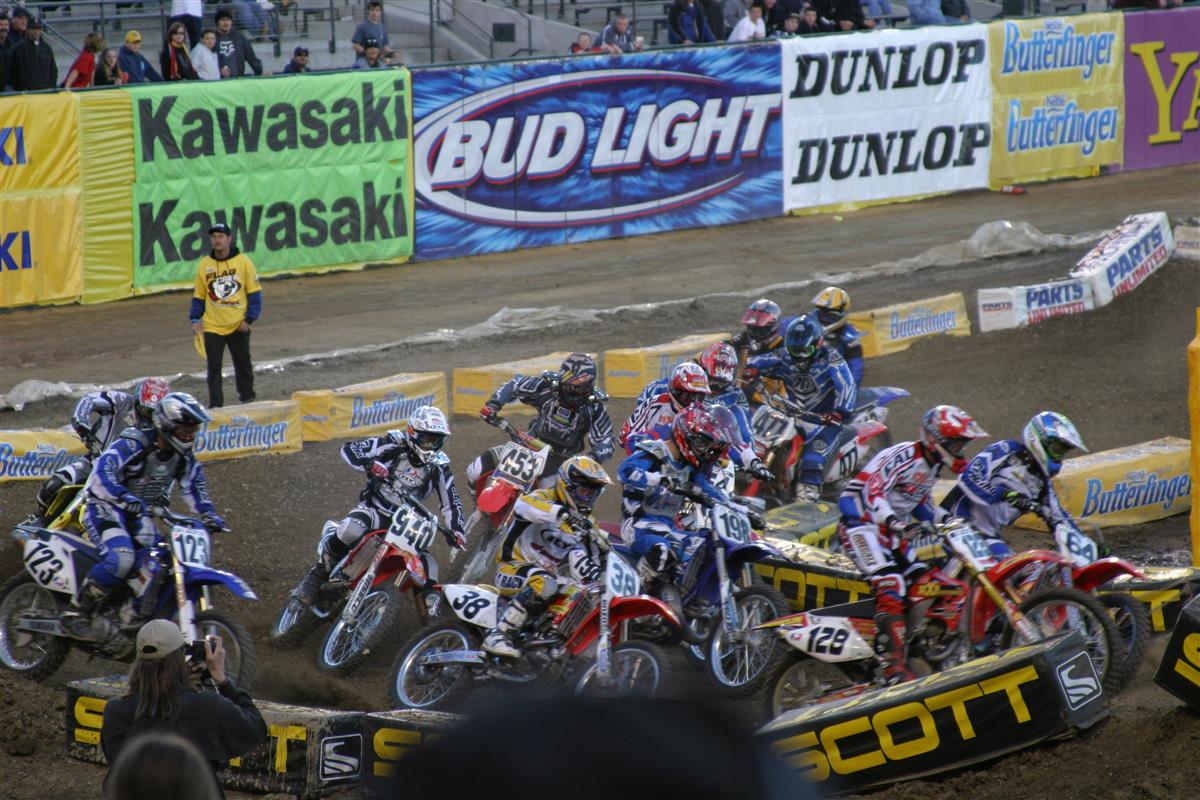
Twenty-two premier-class riders contest the start gate rush under Missouri floodlights with one million dollars on the line.
1. The Title Contenders: Tactical Breakdown and Points Battle
Entering the final gate drops, all eyes rest squarely on Jett Lawrence aboard the Team Honda HRC CRF450R. The young Australian has established a terrifying aura of inevitability in high-stakes races. His riding style minimizes wasted body movement, allowing him to absorb braking bumps with supple knee flex where rivals wrestle their handlebars.
Standing opposite him is Chase Sexton on the Red Bull KTM 450 SX-F Factory Edition. Sexton possesses unmatched raw sprint speed, frequently posting qualifying laps half a second faster than the entire field. When Sexton finds his flow state on natural terrain, his high-side line choice through sweeping off-camber sections is nearly impossible to counter.
Dark horse threats loom across the starting grid. Hunter Lawrence brings metronomic consistency, while veteran legend Eli Tomac thrives when circuit conditions deteriorate into rough, physically brutal ruts. With the Olympic scoring system calculating overall results from two twenty-minute plus one lap motos, consistency outweighs reckless heroics.
2. The Ridgedale Terrain: Why Thunder Ridge Defies Setup Conventions
The circuit constructed at Thunder Ridge is not a standard stadium layout. Track designers built a true hybrid masterpiece. The course integrates sixty feet of natural Ozark elevation drop, sweeping downhill rollers, a stadium-spec dragon’s back, and rhythm sections with thirty-foot high triple jumps.
This hybrid profile creates a nightmare for chassis engineers. In standard Monster Energy AMA Supercross stadiums, suspension valving is set extremely stiff to withstand flat landings and three-foot whoop sections. In Pro Motocross outdoor tracks, suspension is plush, tracking small square-edge acceleration bumps at fifty miles per hour.
At Thunder Ridge, if a team runs Supercross-stiff fork settings, the bike deflects wildly through the high-speed downhill sweepers. If they soften the valving for outdoor compliance, the motorcycle bottom-outs violently into the face of the stadium triples, risking catastrophic chassis snap.
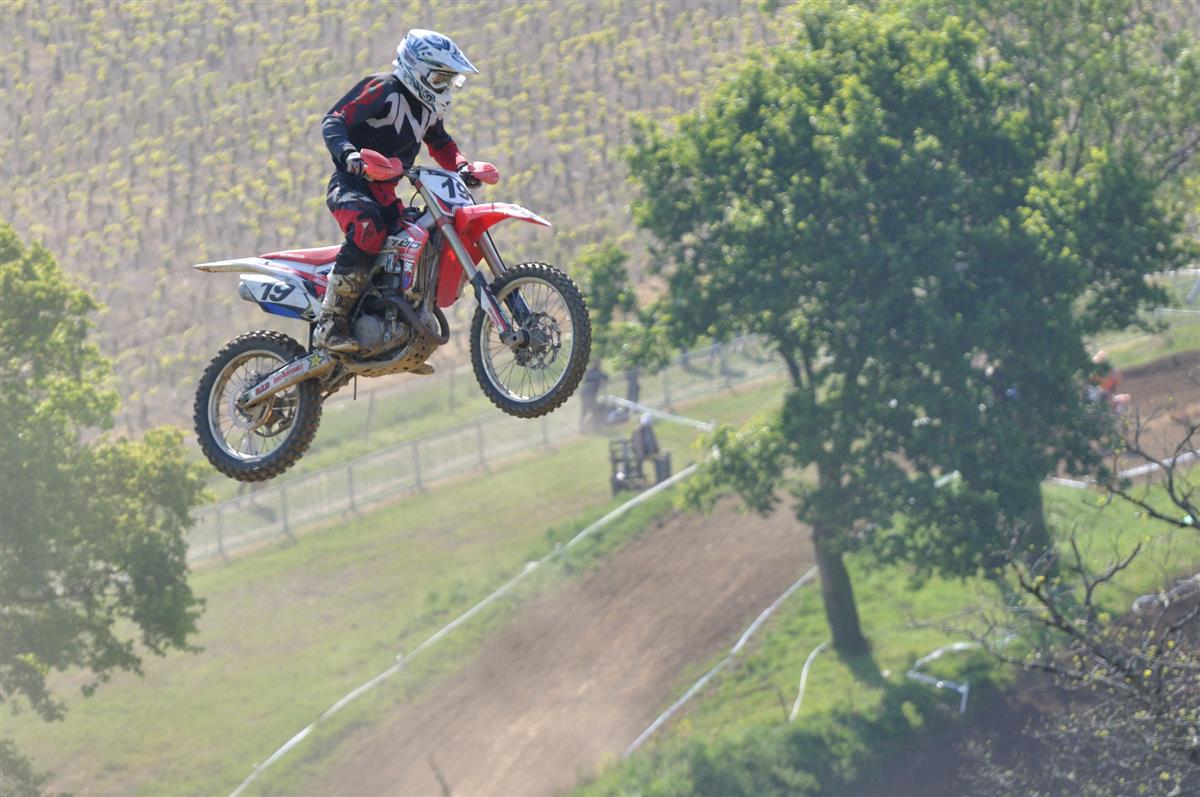
Thunder Ridge combines natural downhill elevation drops with steep stadium-style triple jump rhythm sections.
3. Expert Paddock Breakdown: The Mechanics of the SMX Finals
Explore the tactical analysis from veteran racer and analyst panels breaking down line selection, points math, and pit strategies that decide the million-dollar crown below:
4. Paddock Perspectives: Composure vs. Maximum Aggression
The Jett Lawrence Camp: Clinical Economy of Motion
Supporters highlight Jett’s supernatural ability to manage risk. While rivals push past redline and risk crashes, Jett shifts early, standing tall on the pegs to preserve suspension travel. His heart rate stays low, allowing him to attack during the final five minutes of Moto 2 when others fade from arm pump.
The Sexton & Tomac Camp: Raw Speed Blitzkrieg
Advocates point to Chase Sexton and Eli Tomac as the riders capable of cracking Jett’s mental shield. If Sexton grabs the holeshot and opens a three-second gap, Jett must face roost and dirty air. In deep Ozark dirt, raw aggression on the throttle can disrupt even the smoothest technician on earth.
The Hybrid Clicker Compromise
Factory mechanics reveal teams are running customized triple-clamp offsets and hybrid air-spring setups. By softening high-speed compression damping while maintaining stiff low-speed rebound, riders achieve chassis stability through rhythm jumps without sacrificing front-end bite on slick corner exits.
5. Pit Board Strategy and the Blue Groove Night Transition
Track conditions in Missouri change dramatically between daylight and darkness. During afternoon practice and Moto 1, track crews rip the Ozark clay deep, producing moist loamy berms. Riders rely on scoop tires to dig through soft soil and launch off the metal start grate.
By the time Moto 2 rolls to the gate under nighttime floodlights, the surface hardens into a polished blue-groove finish. Traction evaporates on corner entry, forcing mechanics to swap from scoop tires to intermediate soft-terrain treads like the Dunlop Geomax MX34. A miscalculated tire choice in the final moto costs tenths of a second per corner.
Throughout the twenty-minute moto, pit mechanics along the mechanic signal area hold out dry-erase boards flashing vital gap metrics. With triple points in play according to the SuperMotocross championship regulations, riders must calculate whether chasing a leader is worth the risk of a high-speed tumble.
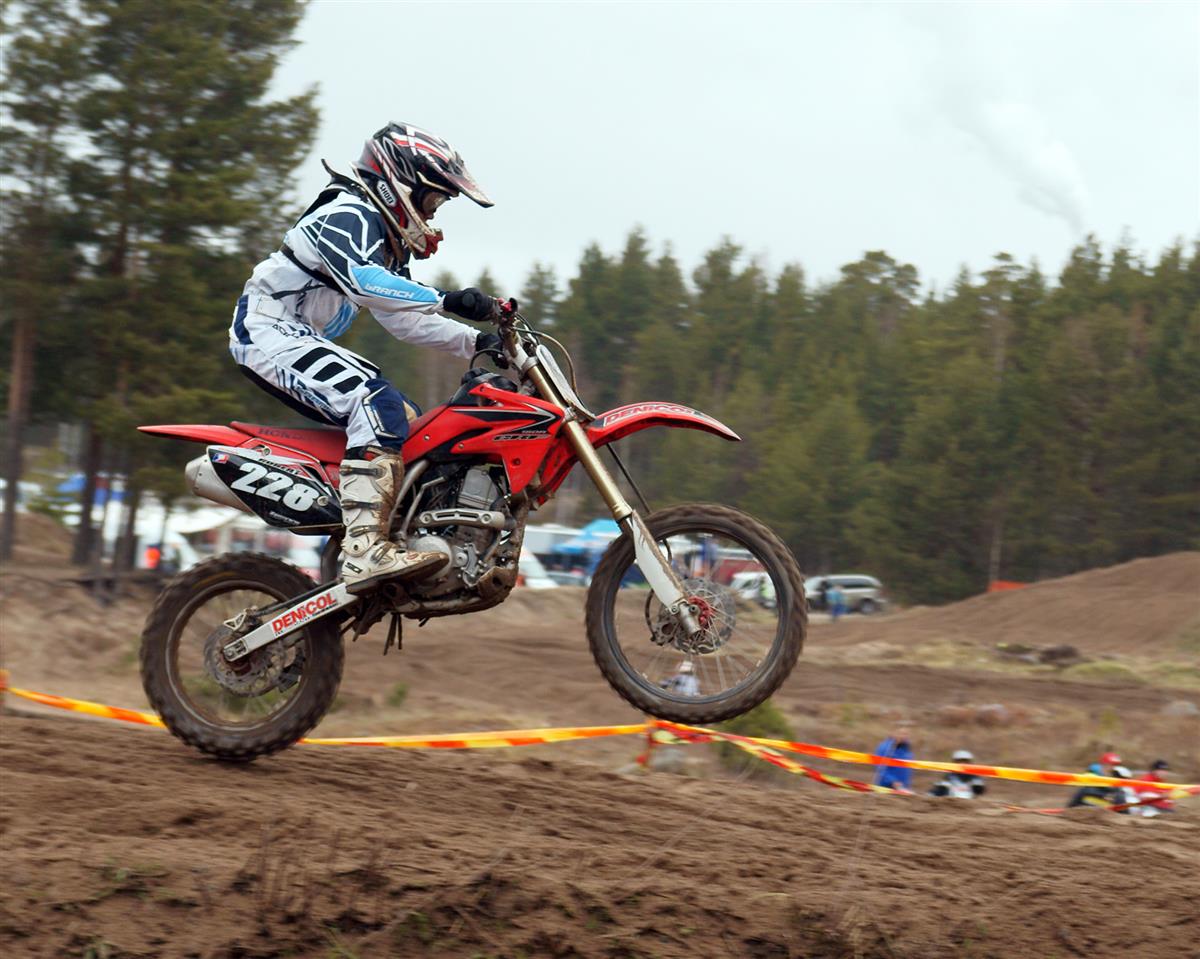
Deep afternoon ruts test tire tread choice and throttle sensitivity before track surfaces harden into slick blue groove.
6. Final Verdict: Who Takes Home the $1 Million Check?
While Chase Sexton has the explosive speed to take Moto 1 and Eli Tomac has the grit to charge through roost, the overall favorite remains Jett Lawrence. The Australian rider has repeatedly demonstrated an ice-cold ability to ride within himself, taking second place when needed to clinch the overall Olympic score.
As reported by seasoned journalists at Racer X Online, championship titles are earned across months of testing, but million-dollar checks are won through mental discipline in the final ten laps. When the thirty-second board turns sideways at Thunder Ridge, only the rider who balances pure aggression with mathematical precision will hoist the trophy under the Ozarks night sky.
Fans tracking the championship drama can follow live trackside updates, rider telemetry debates, and community podium predictions on our official Facebook community as the gates prepare to drop.
7. FAQs
How does the SuperMotocross World Championship payout work?
The winner of the 450SMX Championship receives a guaranteed $1,000,000 bonus check. The 250SMX champion earns $500,000, with total prize money distributed across the three playoff rounds exceeding $5.5 million.
What makes the SMX Finals points structure unique?
The playoffs utilize an escalating points scale. Playoff 1 pays single points, Playoff 2 awards double points, and the World Championship Finals award triple points (75 points for first place). This setup ensures the championship remains undecided until the final gate drops.
How are Olympic scores calculated in the SMX two-moto format?
A rider’s finish in Moto 1 and Moto 2 are added together (for example, 1st + 2nd = 3 points). The rider with the lowest combined total wins the overall round. In the event of a tie, the higher finish in Moto 2 serves as the tiebreaker.
Authentic motorsport graphic streetwear tailored for modern lifestyle wardrobes.