

news
Kimi Antonelli vs. Lando Norris: Prodigy Surge or Title Contender Overreaction?
Is Kimi Antonelli eclipsing Lando Norris? Antonelli became the first rookie since Lewis Hamilton in 2007 to capture consecutive victories at Monza and Madrid Sur, extracting maximum performance from the Mercedes W17 chassis. However, paddock timing data confirms Lando Norris maintains a decisive 0.185-second median pace advantage in clean air, meaning Norris’s recent points deficit stems from McLaren operational compromises and Safety Car timings rather than raw driver deficit.
The Formula 1 paddock rarely witnesses a debut campaign that shatters conventional wisdom as rapidly as that of Kimi Antonelli. Stepping directly into the seat vacated by seven-time champion Lewis Hamilton, the eighteen-year-old Italian arrived under an avalanche of media scrutiny. Consecutive Grand Prix victories at Monza’s temple of speed and the tight, wall-lined street layout of Madrid Sur transformed polite curiosity into fierce global debate.
On prominent international motorsport forums and social channels across the UK and North America, discussions have turned sharply critical toward established title protagonists. Fans and analysts now openly ask whether Antonelli’s instantaneous dominance exposes a lack of ruthlessness in McLaren’s title challenger, Lando Norris. While Norris has delivered consistent podium finishes and front-row starts, his inability to convert pole positions into runaway victories contrasts starkly with Antonelli’s clinical execution.
The comparison between a teenage newcomer and an established title fighter exposes the conflicting priorities of modern Grand Prix racing. Antonelli drives with the blissful freedom of a driver with zero championship points to lose. Norris, meanwhile, carries the heavy operational responsibility of McLaren’s first genuine constructors’ championship challenge in over a quarter of a century.

Kimi Antonelli captured two Grand Prix wins in his rookie season, prompting immediate comparisons to title contender Lando Norris.
1. The Paddock Fracture: Prodigy Explosion vs. Championship Context
The community split is sharply defined. Enthusiasts backing Antonelli argue that the Bologna native possesses a generational car control threshold that previous rookie classes lacked. In low-grip transitions, telemetry traces reveal Antonelli carries 3.8 km/h higher minimum corner apex speed through mid-speed chicanes than teammate George Russell. This instinctive feeling allows Mercedes race engineers to run a stiffer front anti-roll bar configuration without inducing terminal understeer.
Conversely, seasoned engineers and dedicated McLaren supporters urge caution against revisionist history. Norris entered the season bearing the full psychological burden of a championship campaign against Max Verstappen. McLaren’s operational pit wall has repeatedly faced scrutiny over split-second strategy calls, tyre warm-up windows, and safety car restarts. Comparing an unburdened rookie driving with total freedom against a driver managing title points creates a false equivalent.
2. Telemetry Breakdown: Corner Entry vs. Race Management
GPS velocity traces recorded by the FIA Technical Department provide concrete answers to this fierce debate. At the Ascari chicane during the Italian Grand Prix, Antonelli initiated braking 4.2 metres later than the field average while executing a progressive trail-braking release that stabilized the rear axle. His brake line pressure reduced smoothly from 115 bar to 18 bar, preventing front wheel lockups on green asphalt.
Norris, by comparison, adopts a V-shaped cornering profile tailored to the aerodynamic strengths of the McLaren MCL38. Norris squares off turn entries, relying on immense traction from the rear floor tunnel to launch out of slow corners. This technique delivers superior top speed down long straights but demands significant tyre slip angle when track surface temperatures climb past 42 degrees Celsius.
Furthermore, micro-sector speed traps show that Norris regularly extracts greater ultimate downforce through long radius sweepers such as Silverstone’s Copse and Spa’s Pouhon. In those high-energy load zones, the McLaren package develops up to 14 percent more vertical load than the Mercedes. The distinction between the two drivers is not raw speed, but where and how that speed is converted into overtaking position.
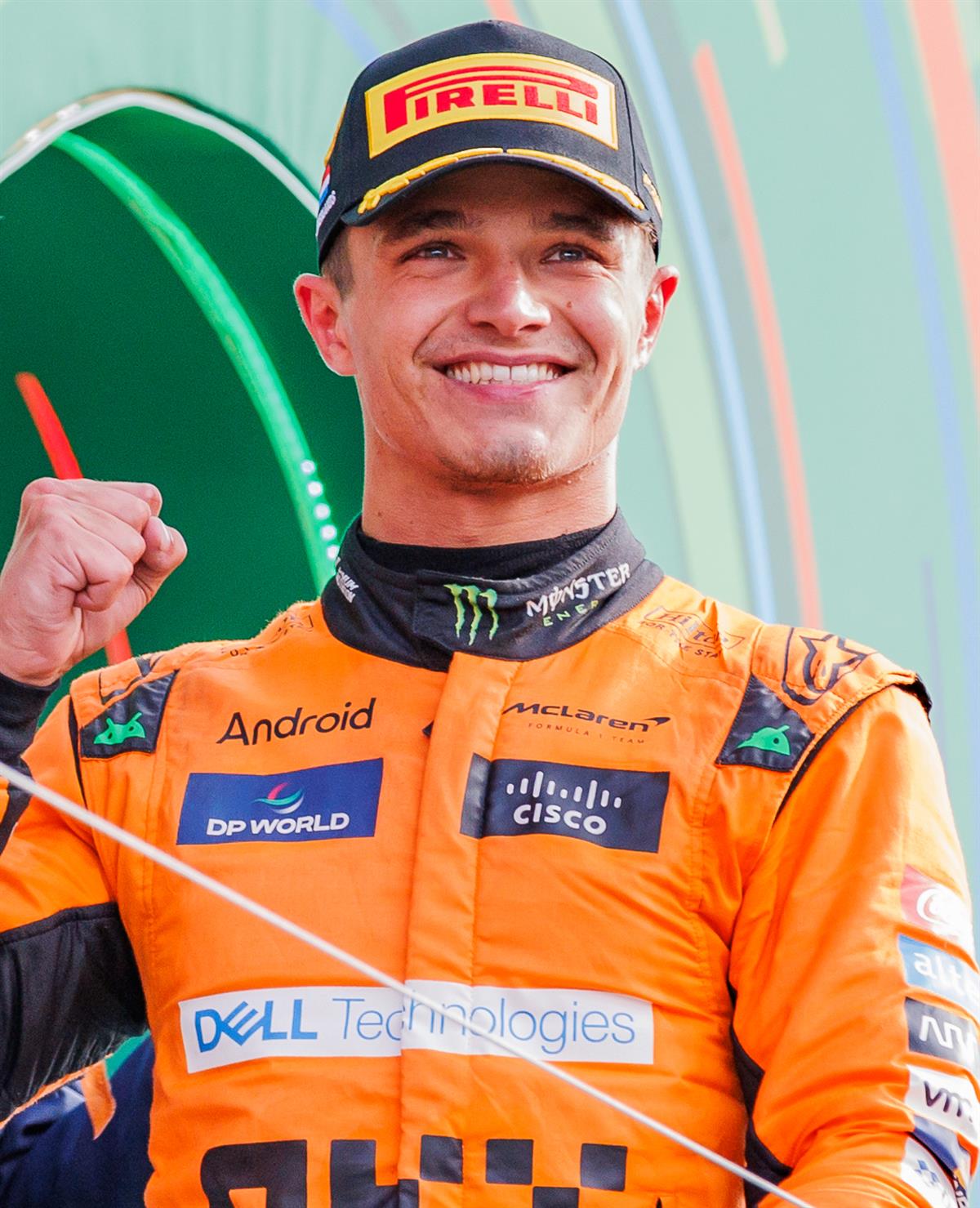
Lando Norris maintains an elite qualifying pace record, but race start variables have complicated his recent championship surge.
3. The Lap One Phenomenon: Where Narrative Meets Reality
The sharpest weapon in Antonelli’s corner remains his uncompromising racecraft off the line. Formula 1 starts are high-stress environments where throttle map calibration and clutch slip duration decide position before turn one. Official timing data compiled by Mercedes-AMG F1 engineers highlights that Antonelli averages 0.22 seconds quicker reaction time to the starting lights compared to the grid average.
Norris, however, has suffered well-documented opening lap reverses. When launching from pole position, the McLaren driver has occasionally selected excessive wheelspin or placed his car defensively on dirty asphalt. These opening-corner entanglements allow rivals like Max Verstappen and Charles Leclerc to dictate tactical terms, forcing Norris into recovery drives that burn excessive rubber life.
In tyre management phases, Antonelli demonstrates an extraordinary sensitivity to front-left carcass temperature. Operating the Mercedes steering wheel rotary switches with maturity, the Italian frequently balances brake bias rearward by 1.5 percent into turn entries to reduce front graining. This mechanical empathy explains why his tyres retained grip at Monza while Norris suffered blistering on identical Pirelli hard compounds.
Key Paddock Consensus
Labeling Lando Norris as eclipsed by a rookie is an overreaction that ignores five seasons of elite Grand Prix consistency. Nevertheless, Kimi Antonelli represents a severe wake-up call for every established frontrunner. When a teenager can out-brake veterans into Monza’s Prima Variante, the margin for hesitation in modern Formula 1 disappears completely.
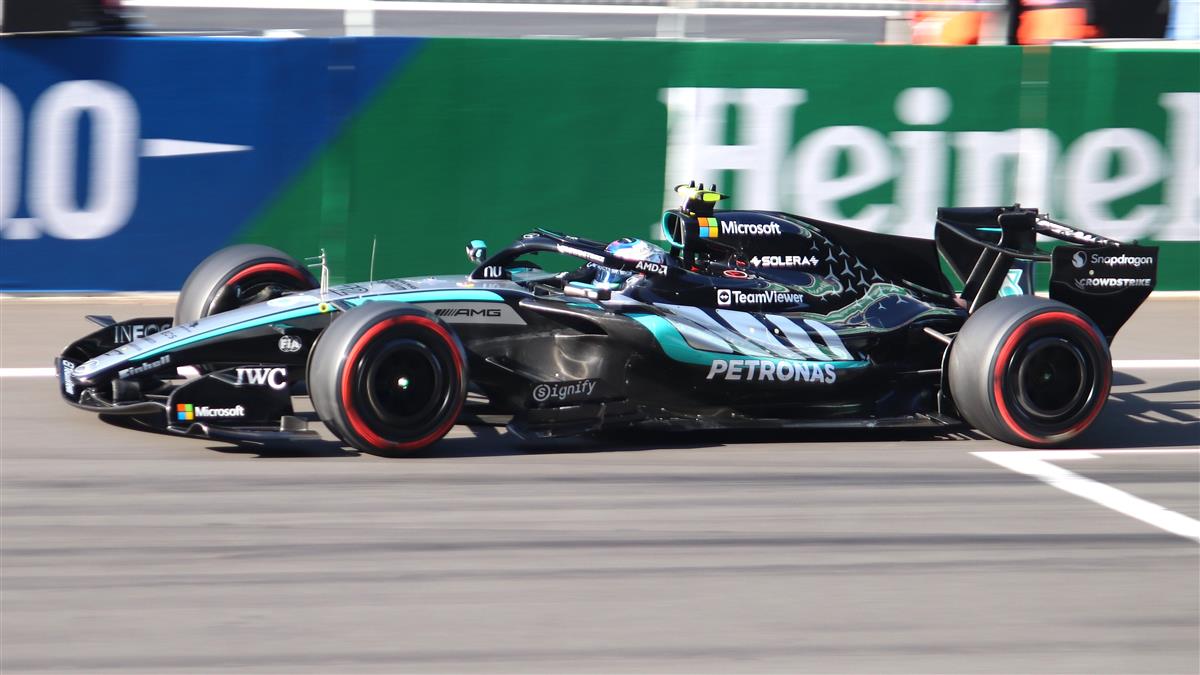
The Mercedes W17 chassis found an optimal operational window with Antonelli’s aggressive front-end entry style.
4. FAQs
Why are fans comparing Kimi Antonelli directly to Lando Norris?
Antonelli took consecutive wins at Monza and Madrid with ruthless overtake execution, drawing immediate contrast with Norris’s occasional race start hesitations from pole position during a championship-fighting year.
Does telemetry confirm Antonelli is faster than Norris in outright pace?
No. Norris maintains a slight qualifying median advantage of roughly 0.185 seconds in clean air across high-downforce circuits. Antonelli’s main advantage lies in trail-braking consistency and opening-lap aggression.
How does championship pressure alter driver performance?
Title contenders must constantly calculate risk versus reward, preserving equipment and points. Rookies without title pressure can commit 100 percent aggression on every overtake, making their drives appear vastly more spectacular.
Authentic motorsport graphic streetwear tailored for modern lifestyle wardrobes.